State of the Union: Can Obama get his mojo back? (+video)
In the State of the Union address Tuesday night, President Obama will announce an increase in the minimum wage for new federal contract workers – part of his plan to make 2014 a 'year of action.'

President Obama works at his desk in the Oval Office on Monday, ahead of Tuesday night's State of the Union speech. With the president's approval ratings ticking upward, aides say he's ready to use the 'pen and the phone' to move his agenda forward.
Jacquelyn Martin/AP
[Updated 7:30 a.m. Jan. 28]
In Pictures Inside President Obama's White House

Related stories

| Ads by Google |
|
From just £30K - 30-48% returns
in 24-36 months & guaranteed resale |
Subscribe Today to the Monitor
President Obama is ready to get his mojo back.
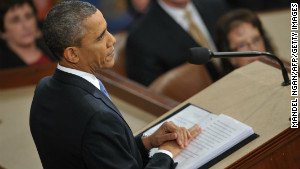
Tuesday night, in his fifth State of the Union address, Mr. Obama will lay out a familiar litany of goals. He wants to reduce income inequality, boost opportunity, and reform the immigration system. He will highlight the coming end of US military involvement in Afghanistan. He will talk climate change. He will defend his health-care reform.
And in a move to spur Congress to act on income inequality, Obama will announce a plan to raise the minimum wage for workers on new federal government contracts to $10.10 per hour, according to The Washington Post. He will do so via an executive order, following his pledge to use his executive powers to advance his agenda.
But almost as important as what he says will be how he says it. By the end of 2013, Obama was sounding weary, even a little defeated, after a year of stumbles – on gun control, on Syria, on Obamacare.
RECOMMENDED: Is Barack Obama an imperial president?
Now, Obama’s job approval ratings are ticking upward (though still below 50 percent), and he has a new mantra: He’s ready to use “the pen and the phone” to move his agenda forward. That’s his way of saying, “Watch out, Congress. If you don’t give me what I want, I’m going to use my executive powers to act on my own.”
2014 will be a “year of action,” Team Obama says. And there’s nothing like giving an address to a joint session of Congress, televised live to the nation (and the globe), to get the presidential juices going. Some 30 million people are expected to watch.
“I think you’ll see him feeling energized tomorrow,” says Peter Fenn, a Democratic strategist. “As much as he is cool, calm, and collected, and as much as he sees and plays the long game, he’s not averse to going to the basket. He’ll be in take-charge mode.”
But what happens the next day? Literally, Obama gets on Air Force One and flies around the country to give more speeches. And he will, once again, have to fight to be heard above the din of politics – the already fierce media obsession with the 2016 presidential race and, increasingly, the November midterms, which will determine whether the Republicans retake the Senate for Obama’s final two years in office.
Still, on Tuesday night, the stage will be Obama’s – his best chance to set the agenda for the remainder of his presidency, even if it’s just a reassertion of agendas past.
“It’s difficult for presidents in their last years to initiate new proposals and have the Congress take him seriously,” says Cal Jillson, a political scientist at Southern Methodist University in Dallas. “But presidents remain consequential. It’s always true that being president of the United States means you have your hands on the levers of power.”
Even if Obama’s impasse with Congress holds, the president will still face the inevitable emergencies and foreign policy challenges.
Speaking on talk shows Sunday, top Obama aides laid down the gauntlet to Congress.
“What we saw last year in 2013 was a Washington that did not deliver for the American people,”White House press secretary Jay Carney said on ABC's "This Week." “The president sees this as a year of action, to work with Congress where he can and to bypass Congress where necessary. To lift folks who want to come up into the middle class.”
Senior adviser Dan Pfeiffer echoed those remarks on Fox News Sunday: “I think what you're going to hear from the president on Tuesday night is a series of concrete, practical, specific proposals on how we restore opportunity, through a wide set of means – job training, education, manufacturing, energy. There will be some legislative proposals, but also a number of actions he can take on his own.”
The one significant area where there is potential for progress this year is immigration reform.Congressional Republicans are prepared to move forward with piecemeal legislation, instead of a comprehensive package. Obama has said he’s willing to go along with smaller bills, as long as a path to citizenship is in the mix.
Republicans know that to make progress with Hispanic voters, they need to move on immigration. The question is when. The issue matters in a handful of congressional districts, and some key statewide races this November, but immigration is a more critical issue for the presidential race in 2016. The GOP’s nominee in 2012, Mitt Romney, got only 27 percent of the Hispanic vote. Republicans must do better with this fast-growing demographic if they ever hope to retake the White House.
If Republicans move on immigration reform this year, that’s when Obama’s promise/threat of executive action comes into play. The GOP can move on some small initiatives, such as codifying into law the Obama administration’s move in 2012 to delay deportation of young illegal immigrants. It could also move to create a new guest worker program.
“This is where Obama really has the opportunity to use his pen and his phone more quickly than the Republican majority of the House can act,” says Mr. Jillson. “When the Republican majority looks like it’s about to do something interesting, he can get ahead of them with an administrative initiative on immigration, as he’s done in the past.”
The question will be whether that’s smart politics. Republicans would likely be furious if the president scooped them again on an immigration initiative. But given the cool relationship between Obama and Republican leaders on Capitol Hill, maybe that wouldn’t matter.
RECOMMENDED: Is Barack Obama an imperial president?
Related stories
Powered by ShoutAbout
Got it? Now do something. Join 2 others.


Most viewed
- Cover Story Is Barack Obama an imperial president?
- Stephen Hawking makes shocking revelation on black holes
- How Detroit's bankruptcy could affect immigration reform
- Monica Lewinsky: Will Rand Paul benefit from raising old scandal? (+video)
- Who gets food stamps? More are college grads; half are working age. (+video)


Become part of the Monitor community




Follow Us